lynx
Application
- Unique Features:
LYNX decanter centrifuges can be tailored to specific requirements using options such as advanced wear protection, automated controls and remote monitoring. - They are available as 2 or 3-phase designs. The bowl and conveying speed, pond depth in the bowl and feed rate are all adjustable to support optimum performance.
- We also cater for EX classification Zone 2 as well as Zone 1.
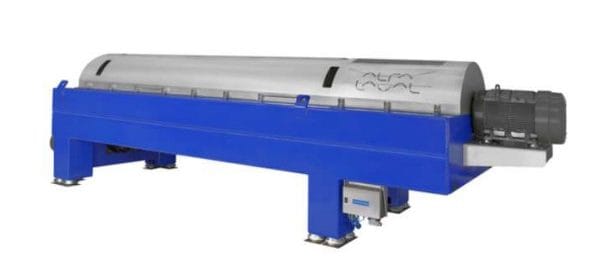
High Performance Decanter Centrifuge
The Alfa Laval LYNX decanter centrifuge is a key component in solids-liquid separation for oil, gas and drilling industry processes such as barite recovery and slop oil. It is specially designed for heavy duty and high recovery at large feed flows and has the best available wear protection. It is also available as a three-phase version for separation of oil, water and dry solids.
benefits
- Unmatched levels of product recovery in continuous operation
- High capacity on market’s smallest footprint
- Low labour cost due to less operator intervention
- Suitable for any harsh conditions
- Robust and trusted technology
Alfa Laval LYNX Decanter Centrifuge
The Alfa Laval LYNX decanter centrifuge is designed for demanding solid–liquid separation duties involving high solids loading, fine particles and abrasive feed materials.
The LYNX range can be evaluated for drilling-fluid treatment, solids control, horizontal directional drilling, tunnel construction, construction-site wastewater, slop-oil treatment and other demanding slurry applications.
Surya Sankara Trading Pvt. Ltd. supports LYNX product and application enquiries from Hyderabad, Telangana and other locations in South India.
Surya Sankara Trading Pvt. Ltd. is an Authorised Distributor for Alfa Laval products.
What Is an Alfa Laval LYNX Decanter?
The Alfa Laval LYNX is a horizontal solid-bowl decanter centrifuge. It continuously separates suspended solids from one or more liquid phases using centrifugal force.
The equipment contains a rotating cylindrical bowl with a conical section and an internal screw conveyor. The bowl and conveyor rotate in the same direction at different speeds.
This differential speed enables the conveyor to transport separated solids towards the solids-discharge end while the clarified liquid exits from the opposite side.
How Does the LYNX Decanter Work?
The separation process generally follows these stages:
The slurry enters the rotating bowl through a stationary feed tube.
The feed is accelerated inside the feed zone.
Centrifugal force moves the denser solid particles towards the bowl wall.
A liquid layer, commonly called the pond, forms inside the bowl.
The screw conveyor transports settled solids towards the conical section.
Dewatered solids leave through the solids-discharge openings.
Clarified liquid exits from the opposite end of the bowl.
Separation performance depends on feed characteristics, bowl speed, differential speed, pond depth, flow rate and chemical conditioning where applicable.
Designed for High-Solids and Abrasive Applications
Drilling mud, tunnel slurry and construction wastewater may contain sand, silt, clay and other abrasive particles. This creates demanding operating conditions for the feed zone, conveyor and solids-discharge areas.
Depending on the selected model and configuration, Alfa Laval offers wear-protection and operational features intended for such applications.
The appropriate protection level should be selected using:
Solids concentration
Particle size
Particle hardness
Feed-flow variation
Operating hours
Required separation result
Expected maintenance interval
Process-fluid characteristics
LYNX Decanter Applications
Oil and Gas Drilling
LYNX decanters can be used in drilling-fluid solids-control systems to remove fine solids and help recover usable drilling liquid.
The required configuration depends on the drilling-fluid system, density, viscosity, particle-size distribution, feed rate and desired cut point.
Barite Recovery
Certain drilling-fluid systems require controlled separation between low-gravity solids and valuable weighting material such as barite.
Successful barite recovery depends on the complete mud properties and operating conditions. A process evaluation is required before selecting the decanter and operating parameters.
Horizontal Directional Drilling
Horizontal directional drilling generates slurry containing soil, clay, sand and drilling fluid. A decanter centrifuge may be used to separate suspended solids and support liquid reuse.
Applications may include:
Pipeline installation
Utility crossings
Cable installation
Road and railway crossings
River-crossing projects
Underground infrastructure
Tunnel-Boring Operations
Tunnel-boring and microtunnelling projects can generate large volumes of mineral slurry. LYNX decanters may support clarification, solids dewatering and water recovery.
Feed variability and abrasive particles must be considered during configuration and wear-protection selection.
Construction-Site Wastewater
Construction water may contain suspended soil, cement particles, clay and other fine solids. A decanter can continuously separate solids where the feed and treatment objectives are suitable.
The complete treatment process may require screening, tanks, chemical conditioning or additional polishing stages.
Slop-Oil Treatment
Selected LYNX configurations may be considered for separating solids and water from oily feed streams.
Three-phase configurations may separate:
A solid phase
A lighter liquid phase
A heavier liquid phase
The achievable separation depends on density differences, temperature, viscosity, emulsion stability and particle characteristics.
Industrial and Mineral Slurries
LYNX decanters may also be evaluated for selected industrial slurries, fine-particle removal and abrasive solid–liquid separation duties.
The exact LYNX model must be selected according to the application rather than the industry name alone.
Two-Phase and Three-Phase Separation
Two-Phase Separation
A two-phase decanter separates a feed into:
Dewatered or concentrated solids
A clarified liquid phase
This arrangement is commonly considered for drilling mud, construction slurry and wastewater containing suspended solids.
Three-Phase Separation
Selected three-phase designs can separate:
Solids
A light liquid phase
A heavy liquid phase
This may be relevant to certain oily-water and slop-oil applications. Adequate density difference and suitable feed conditions are essential.
Not every LYNX model or configuration is automatically suitable for three-phase separation. Availability must be confirmed during equipment selection.
Important LYNX Features
Depending on model and configuration, the LYNX range may incorporate features for:
Wear Protection
Replaceable wear-protection components may be applied in areas exposed to abrasive feed and discharged solids.
Adjustable Operating Parameters
Bowl speed, differential speed, feed rate and pond depth may be adjusted within permitted operating limits to suit changing process conditions.
Continuous Operation
A decanter continuously receives feed and discharges separated solids and liquid, reducing reliance on batch separation.
Automated Control
Applicable automation can monitor operating parameters, alarms and protective functions. The selected control system depends on the installation and project requirements.
Maintenance Access
The equipment design provides access for inspection and service after correct isolation, shutdown and safe preparation.
Compact Installation
A decanter can provide continuous mechanical separation within a relatively compact installation compared with certain settling-based alternatives.
Information Required to Select a LYNX Decanter
Please provide:
Industry and application
Feed-material description
Feed-flow rate
Solids concentration
Particle-size distribution
Particle density
Liquid density
Fluid viscosity
Operating temperature
Required solids dryness
Required liquid clarity
Abrasiveness
Chemical additives
Two-phase or three-phase requirement
Hazardous-area classification
Operating hours
Plant or project location
Available utilities
Installation-space limitations
A representative feed sample or separation trial may be necessary for applications where separation behaviour is uncertain.
LYNX Versus a Conventional Settling System
Gravity settling relies on natural density differences and may require considerable retention time and tank area. A decanter uses centrifugal force to accelerate the separation process.
Potential advantages can include:
Continuous separation
Compact installation
Faster solids removal
Reduced dependence on large settling areas
Controlled solids discharge
Potential liquid recovery and reuse
Ability to handle changing solids loads
However, the decanter requires power, controls, appropriate upstream preparation and scheduled maintenance. The complete lifecycle requirements should be considered.
LYNX Versus Other Alfa Laval Decanters
Alfa Laval offers different decanter ranges for different industries and feed materials.
LYNX: drilling, construction, abrasive slurry and selected oily-waste duties
ALDEC: sludge thickening and dewatering in municipal and industrial wastewater
Foodec: hygienic food and beverage applications
Other decanter ranges may serve edible-oil, starch, ethanol, protein or specialised industrial processes
Selecting the range by application prevents a general-purpose description from being used for technically different separation duties.
Operating Factors That Affect Separation
Feed Rate
Excessive feed may reduce residence time and affect clarification or solids dryness.
Bowl Speed
Bowl speed affects centrifugal force. The permitted speed depends on the model and operating conditions.
Differential Speed
The speed difference between the bowl and conveyor affects solids transport, residence time and torque.
Pond Depth
Pond depth can influence clarification, solids dryness and separation behaviour.
Feed Temperature
Temperature may affect liquid viscosity and separation, particularly in oily-feed applications.
Particle Characteristics
Fine particles, low-density solids and emulsions can be more difficult to separate than larger, denser particles.
Operating settings must remain within the manufacturer’s specified limits.
LYNX Maintenance Considerations
A planned maintenance programme may include:
Monitoring vibration
Monitoring bearing temperature
Checking for abnormal noise
Inspecting for leakage
Monitoring gearbox and drive condition
Checking lubrication
Inspecting wear-protection components
Removing solids accumulation
Reviewing alarms and operating trends
Inspecting the feed and discharge zones
Following recommended service intervals
Maintaining critical spare parts
Only trained personnel should inspect or service a decanter after completing the prescribed shutdown, isolation and safety procedures.
Alfa Laval LYNX Enquiries in Hyderabad and South India
Surya Sankara Trading supports customers in Hyderabad, Telangana and other South Indian locations with preliminary LYNX decanter application and product enquiries.
Applications may include:
Drilling-fluid treatment
Oilfield solids control
Horizontal directional drilling
Tunnel and microtunnelling slurry
Construction wastewater
Slop-oil treatment
Abrasive industrial slurry
Liquid recovery and reuse
Customers should provide process data rather than selecting a machine solely by feed-flow capacity.
Why Contact Surya Sankara Trading?
Authorised Distributor for Alfa Laval products
Hyderabad-based industrial contact point
Application-focused enquiry coordination
Support for LYNX model enquiries
Assistance with process-data collection
Spare-parts and service enquiries
Support across Telangana and South India
Frequently Asked Questions
What is the Alfa Laval LYNX decanter used for?
It is primarily designed for demanding solid–liquid separation involving drilling fluids, construction slurry, fine abrasive particles and selected oily-waste applications.
Is LYNX suitable for drilling mud?
Yes. LYNX decanters can be configured for drilling-fluid treatment and solids-control applications. Selection depends on mud properties, feed rate and required separation.
Can LYNX recover drilling fluid for reuse?
It may remove unwanted solids and support liquid reuse when the feed and separation objectives are suitable. The achievable result depends on the drilling-fluid properties.
Can it handle abrasive solids?
The LYNX range is designed for demanding solids-loading and abrasive applications. Appropriate wear protection should be selected according to particle characteristics and operating hours.
Is LYNX suitable for horizontal directional drilling?
Yes. It may be used to process slurry generated during horizontal directional drilling and support solids removal and drilling-fluid recovery.
Can LYNX treat tunnel-boring slurry?
Yes, subject to feed characteristics and required treatment results. Particle size, solids loading and abrasiveness must be reviewed.
Can LYNX treat construction-site wastewater?
It can be evaluated for construction wastewater containing suspended mineral solids. Additional treatment stages may be necessary to achieve the final water-quality objective.
Can a LYNX decanter separate oil, water and solids?
Selected three-phase configurations may separate a light liquid, heavy liquid and solid phase. Feed density, temperature, viscosity and emulsion stability must be assessed.
What is the difference between LYNX and ALDEC?
LYNX is primarily associated with drilling, construction and abrasive slurry applications. ALDEC is designed mainly for sludge thickening and dewatering in water and wastewater treatment.
How does the screw conveyor remove solids?
The conveyor rotates at a different speed from the bowl and transports settled solids towards the conical end for continuous discharge.
What determines the capacity of a LYNX decanter?
Capacity depends on the selected model, feed properties, solids concentration, particle size, separation objective and operating settings.
What information is needed for a quotation?
Provide feed flow, solids concentration, particle size, densities, viscosity, temperature, required result, operating hours, project location and hazardous-area classification.
Does a LYNX decanter require regular maintenance?
Yes. Bearings, gearbox, drives, lubrication, wear components, vibration, temperatures and protective systems require inspection according to the manufacturer’s maintenance instructions.
Does Surya Sankara supply LYNX decanters in India?
Surya Sankara Trading supports Alfa Laval LYNX enquiries from Hyderabad, Telangana and other South Indian locations.
Is Surya Sankara Trading an Alfa Laval authorised distributor?
Yes. Surya Sankara Trading Pvt. Ltd. is an Authorised Distributor for Alfa Laval products.
Request an Alfa Laval LYNX Application Discussion
Contact Surya Sankara Trading with your feed material, flow rate, solids concentration, particle details and required separation result.
Mobile: +91 97042 70101
Email: suryasankaratraders@gmail.com
Location: Hyderabad, Telangana
Further readings on Plate Heat exchangers
- What is plate heat exchanger
- Benefits of plate heat exchangers
- Plate heat exchanger maintenance guide
- How to select a plate heat exchanger
- Common plate heat exchanger problems
- Plate heat xchanger cleaning guide
- Energy saving using plate heat exchanger
- Plate heat exchanger buying guide
- Plate heat echanger or pharmaceutical industry
- Plate heat exchanger for food & beverage processing