Plate Heat Exchanger Cleaning Guide , A Plate Heat Exchanger (PHE) is designed to deliver high thermal efficiency and reliable heat transfer across industrial processes. However, over time, deposits such as scale, sludge, biofilm, rust, and other contaminants can accumulate inside the plates, reducing efficiency and increasing energy costs.
Following a proper Plate Heat Exchanger Cleaning Guide helps restore performance, reduce downtime, and extend equipment life.
Surya Sankara Trading, an Authorised Distributor for Alfa Laval products, supplies genuine Alfa Laval Plate Heat Exchangers, original spare parts, and expert maintenance support to industries across India. Contact us for Plate Heat Exchanger Cleaning Guide
Why Plate Heat Exchanger Cleaning Is Important
Routine cleaning offers several operational benefits:
- Restores heat transfer efficiency
- Reduces energy consumption
- Minimizes pressure drop
- Prevents unexpected shutdowns
- Extends equipment lifespan
- Protects plates and gaskets
- Improves production reliability
- Lowers maintenance costs
Neglecting regular cleaning can result in fouling, scaling, corrosion, and reduced system performance.
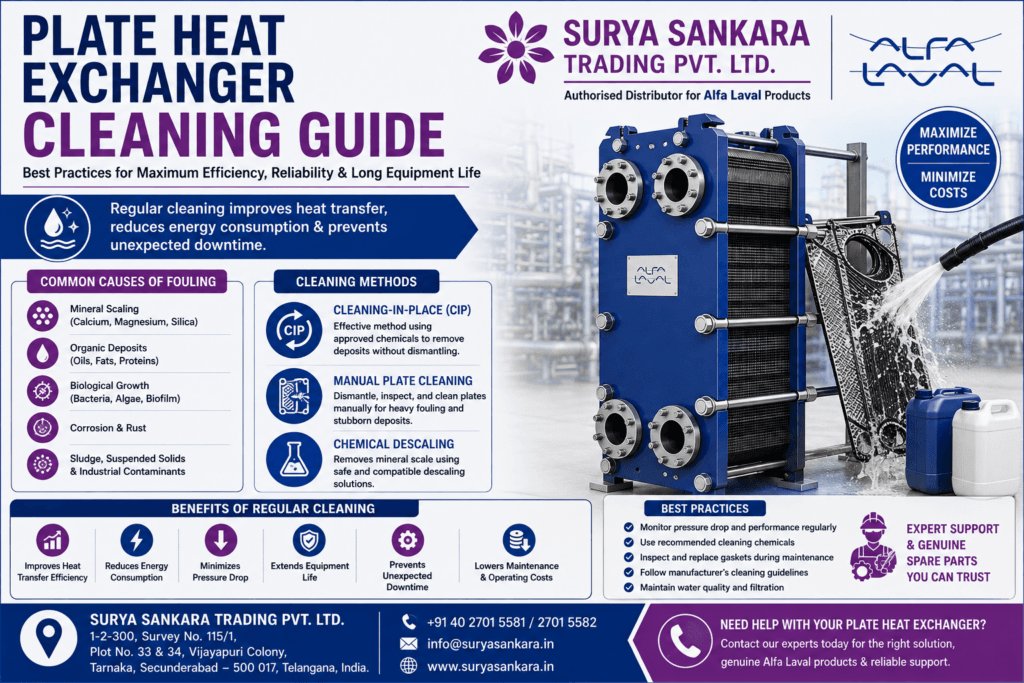
Common Causes of Fouling
Several contaminants can build up inside a plate heat exchanger:
Mineral Scaling
- Calcium carbonate
- Magnesium deposits
- Silica
Organic Fouling
- Food residues
- Oils and fats
- Proteins
Biological Fouling
- Bacteria
- Algae
- Biofilm
Corrosion Deposits
- Rust
- Iron oxide
- Metallic particles
Industrial Contaminants
- Sludge
- Suspended solids
- Chemical residues
Signs Your Plate Heat Exchanger Needs Cleaning
Watch for these warning signs:
- Reduced heating or cooling performance
- Increased pressure drop
- Higher energy consumption
- Uneven temperature distribution
- Flow restrictions
- Frequent system alarms
- Visible leakage caused by deposit buildup
- Reduced production efficiency
Early intervention prevents expensive repairs and production losses.
Plate Heat Exchanger Cleaning Methods
1. Cleaning-In-Place (CIP)
Cleaning-In-Place is the preferred method for many industrial applications because it cleans the exchanger without dismantling it.
Advantages
- Minimal downtime
- Faster cleaning
- Lower labour costs
- Consistent cleaning quality
- Suitable for food, beverage, dairy, pharmaceutical, and chemical industries
Typical cleaning solutions include alkaline cleaners, acid descalers, or manufacturer-approved chemicals selected according to the type of deposits.
2. Manual Plate Cleaning
If heavy fouling exists, manual cleaning may be necessary.
Steps
- Shut down the system safely.
- Isolate and drain the heat exchanger.
- Open the plate pack following manufacturer guidelines.
- Inspect each plate carefully.
- Wash deposits using approved cleaning agents.
- Avoid abrasive tools that can damage plate surfaces.
- Inspect gaskets and replace if necessary.
- Reassemble using the recommended tightening dimensions.
3. Chemical Descaling
Chemical descaling removes stubborn mineral deposits that reduce heat transfer efficiency.
This process should only use chemicals compatible with the plate material and gasket type to avoid corrosion or premature wear.
Read Our Other Articles Related to Plate Heat Exchangers of Alfa Laval Distributor
01) What is plate heat exchanger?
02) Benefits of Plate heat exchangers
03) Plate heat exchanger application
04) Plate heat exchanger Vs Shell & tube heat exchanger
05) Plate heat exchanger maintenance guide
06) How to select a plate heat exchanger
07) Common Plate Heat Exchanger Problems
Best Practices for Plate Heat Exchanger Cleaning
To maintain optimal performance:
- Follow the manufacturer’s cleaning recommendations.
- Monitor pressure drop regularly.
- Record operating temperatures.
- Use filtered process fluids where possible.
- Inspect gaskets during every maintenance cycle.
- Replace damaged plates immediately.
- Use only approved cleaning chemicals.
- Maintain water treatment systems.
- Schedule preventive maintenance instead of waiting for failure.
Cleaning Frequency
Cleaning frequency depends on:
- Type of process fluid
- Water quality
- Operating temperature
- Flow rate
- Industry application
- Fouling tendency
High-fouling applications may require more frequent cleaning, while clean water systems may need only periodic inspections.
Common Cleaning Mistakes to Avoid
Avoid these practices:
- Using highly abrasive brushes
- Applying excessive pressure
- Mixing incompatible cleaning chemicals
- Ignoring gasket condition
- Over-tightening plates during reassembly
- Skipping preventive inspections
- Delaying cleaning after performance declines
Proper maintenance protects both equipment and productivity.
Benefits of Professional Heat Exchanger Cleaning
Professional maintenance provides:
- Improved heat transfer
- Lower energy costs
- Longer equipment life
- Reduced maintenance expenses
- Better process reliability
- Reduced downtime
- Improved plant productivity
- Higher return on investment
Why Choose Alfa Laval Plate Heat Exchangers?
Alfa Laval Plate Heat Exchangers are trusted worldwide because they offer:
- Outstanding thermal efficiency
- Compact footprint
- Easy maintenance
- Energy savings
- Reliable operation
- High-quality engineering
- Long service life
- Genuine spare parts support
Regular cleaning ensures these systems continue operating at peak performance.
Why Choose Surya Sankara Trading?
Surya Sankara Trading is an Authorised Distributor for Alfa Laval products, offering comprehensive heat transfer solutions for industries across India.
Our services include:
- Genuine Alfa Laval Plate Heat Exchangers
- Original Alfa Laval Plates
- Genuine Gaskets
- Technical Product Selection
- Cleaning Guidance
- Preventive Maintenance Support
- Spare Parts Supply
- Installation Assistance
- After-Sales Technical Support
Our experienced team helps industries maximize equipment performance while reducing operational costs.
Frequently Asked Questions
How often should a plate heat exchanger be cleaned?
Cleaning intervals depend on operating conditions, fluid quality, and fouling rates. Regular monitoring of pressure drop and thermal performance helps determine the ideal cleaning schedule.
What is CIP cleaning for a plate heat exchanger?
CIP (Cleaning-In-Place) is a method that circulates approved cleaning solutions through the heat exchanger without dismantling it, removing deposits while minimizing downtime.
What happens if a plate heat exchanger is not cleaned?
Failure to clean can lead to fouling, reduced heat transfer, increased energy consumption, pressure drop, corrosion, and premature equipment failure.
Can I use any chemical cleaner?
No. Always use cleaning chemicals recommended for the plate material and gasket type to prevent damage and maintain warranty compliance.
How do I know if my plate heat exchanger needs cleaning?
Common signs include reduced heating or cooling efficiency, higher pressure drop, increased energy consumption, and uneven process temperatures.
Should gaskets be inspected during cleaning?
Yes. Gaskets should always be inspected for wear, cracks, hardening, or chemical damage and replaced if necessary.
Restore Peak Performance with Expert Plate Heat Exchanger Cleaning Support
Is your plate heat exchanger experiencing reduced efficiency, increased pressure drop, or fouling? Don’t let deposits affect your productivity or increase operating costs.
Surya Sankara Trading, an Authorised Distributor for Alfa Laval products, offers genuine Alfa Laval Plate Heat Exchangers, original plates and gaskets, technical guidance, preventive maintenance support, and expert assistance for industrial heat transfer applications.
Whether you need help selecting the right cleaning method, sourcing genuine spare parts, or planning preventive maintenance, our experienced team is ready to assist.
Contact Surya Sankara Trading today to keep your Alfa Laval Plate Heat Exchanger Cleaning Guide operating at peak efficiency with reliable products, expert advice, and trusted after-sales support.
Further readings on Plate Heat exchangers
- What is plate heat exchanger
- Benefits of plate heat exchangers
- Plate heat exchanger maintenance guide
- How to select a plate heat exchanger
- Common plate heat exchanger problems
- Plate heat xchanger cleaning guide
- Energy saving using plate heat exchanger
- Plate heat exchanger buying guide
- Plate heat echanger or pharmaceutical industry
- Plate heat exchanger for food & beverage processing